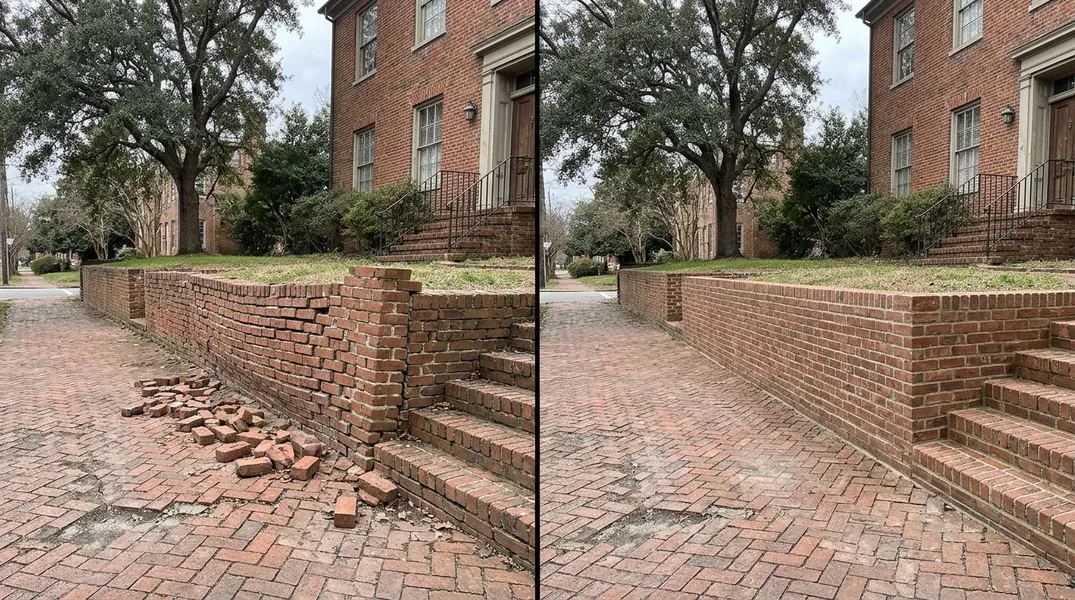
How to Tell If Your Retaining Wall Is Storm-Damaged
After a heavy nor'easter or a summer thunderstorm rolls through Norfolk, it is easy to overlook changes in your retaining wall. The damage is not always dramatic. Sometimes a wall simply leans a little more than it used to, or a hairline crack appears near a corner. Other times, a section has clearly shifted, and soil is spilling through the joints. Knowing what to look for helps you decide whether you are facing a minor fix or a larger project.
Start with the obvious signs: bulging, leaning, deep cracks, separated blocks, or water pooling at the base. Pay attention to the soil behind the wall as well. If you see sinkholes, erosion, or muddy runoff after rain, the drainage system may have failed. A wall that was perfectly straight last season but now has a visible tilt is telling you something has changed below the surface, and that is the moment to call a professional for an inspection.
Leaning Retaining Wall Repair: When Straightening Is Still Possible
A leaning wall is the most common storm damage homeowners ask about. The good news is that not every lean requires a full rebuild. If the movement is limited to a small section and the wall is otherwise structurally sound, Retaining Wall Repair can often stabilize the wall and correct the tilt. This usually involves addressing the cause, such as poor drainage or saturated soil, before reinforcing the affected area.
Timing matters. A wall that leans two inches today may lean six inches after the next storm, and the repair cost grows with every inch of movement. If you are searching for leaning retaining wall repair near me, the smart move is to get an inspection before the next rainy season. A local contractor can tell you whether the wall can be saved or whether the movement has gone too far for a reliable fix.
Retaining Wall Crack Repair: Small Fixes vs. Warning Signs
Not all cracks are equal. Hairline cracks in the mortar or surface of a concrete wall are often cosmetic and can be sealed without much fuss. But cracks that are wider than a quarter inch, run diagonally, or appear alongside shifting blocks are warning signs. Those patterns usually mean the wall is moving, and patching the crack alone will not solve the underlying problem. Proper retaining wall crack repair starts with diagnosing why the wall cracked in the first place.
In many cases, the culprit is water. Poor drainage, clogged weep holes, or a missing French drain can saturate the soil behind the wall until the pressure becomes too much. Repairing the crack without fixing the drainage is a temporary patch at best. A qualified contractor will inspect the wall, the soil, and the drainage together, then recommend a repair that actually holds up through the next storm season.
When Replacement Beats Repair
Sometimes repair is not the best use of your money. If the wall is severely bowed, has multiple failed sections, or was built without proper drainage or footings in the first place, Retaining Wall Replacement is often the more economical choice over time. Repeated repairs on a failing wall add up quickly, and each fix only buys a little more time before the next problem appears.
Replacement also gives you the chance to upgrade materials and construction methods. Modern Concrete Retaining Walls are engineered to handle the heavy rain and coastal weather that homeowners in Virginia Beach and Chesapeake know well. A properly built wall with correct footings, backfill, and drainage can last decades, which makes the upfront investment easier to justify when you compare it to years of patchwork repairs.
Retaining Wall Replacement Cost in Norfolk: What to Budget
Homeowners often ask what a new wall will cost before deciding between repair and replacement. The honest answer is that it depends on the height, length, material, and site conditions. A short, low wall in an open yard is a very different project from a tall wall on a slope with limited access. For a realistic number, request a written pricing breakdown that covers materials, labor, drainage, and disposal of the old wall.
Keep in mind that the cheapest bid is not always the best value. A low quote that skips proper drainage or footings will cost you more in the long run. Ask each contractor what is included, how they handle water management, and whether permits are required for your project. A clear, itemized quote makes it much easier to compare options and choose the right path for your property.
Retaining Wall Repair Near Me: Getting a Professional Assessment
If you are in Portsmouth or anywhere in the Norfolk area and your wall has taken a hit from recent storms, do not wait for the next round of bad weather to make things worse. A professional assessment will tell you whether you are looking at a straightforward repair or a full replacement, and it gives you a clear plan before the damage spreads. Norfolk Retaining Wall offers inspections and written recommendations so you can make an informed decision.
Call (757) 960-7978 to schedule a free estimate, or reach out online to book an inspection. Whether your wall needs a targeted fix or a complete rebuild, you will get straightforward advice and a clear next step.
Looking for a professional retaining wall contractor in Norfolk? Norfolk Retaining Wall responds fast for all your retaining wall needs.
Get a Free QuoteOur services: Retaining Wall Installation · Retaining Wall Repair · Retaining Wall Replacement