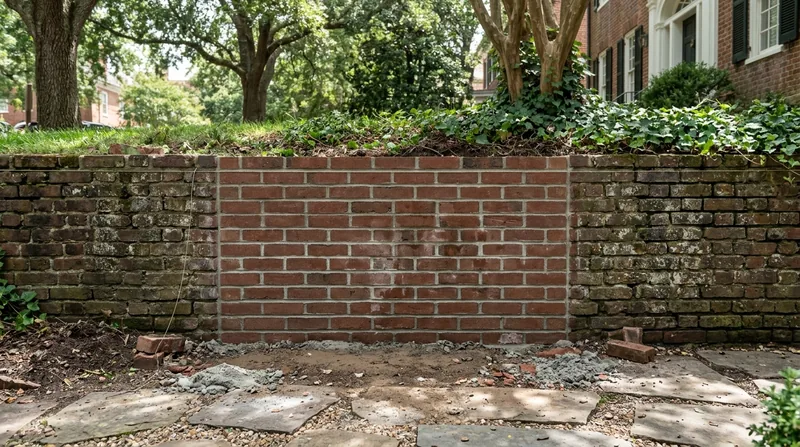




Norfolk sits on a low, flat coastal plain where the Elizabeth River meets Hampton Roads and the Chesapeake Bay, and much of the city lies only a few feet above sea level. Tidal creeks like the Lafayette River and Knitting Mill Creek cut through neighborhoods from Freemason to Ocean View, and the land itself is slowly subsiding. That combination of sandy and silty soils, a high water table, and recurrent tidal flooding is hard on any wall holding back a raised lot or a driveway grade. If you need Retaining Wall Repair in Norfolk, the cause is usually water, not age. We repair leaning, bowing, cracked, and undermined walls across the city, from filter fabric and drainage fixes that stop soil washout to tieback anchors and partial rebuilds after a storm. Call (757) 960-7978 and we will tell you what the wall is actually doing. You can also read about leaning and collapsed wall repair before you call.
Why Retaining Walls Fail in Norfolk's Tidal Soil and Historic Neighborhoods
Most wall failures we see in Norfolk trace back to water. Sandy and silty coastal soils drain fast until they clog, and a high water table keeps the backfill saturated for weeks after a nor'easter. In Ghent and Colonial Place, old brick garden walls were often built with no weep holes at all, so hydrostatic pressure builds until the face bows. Along the Lafayette River and in Edgewater, king tides push water into the soil behind low walls above bulkheads and wash out the footing. In Larchmont and Norview, rotting timber and railroad tie walls from the 1970s and 1980s are now giving way under the weight of saturated fill.
- Water pressure from clogged drains and missing weep holes pushes walls outward and causes the lean you see.
- Tree roots from live oaks, crape myrtles, and loblolly pines lift footings and crack block courses.
- Subterranean termites tunnel into timber and railroad tie walls and hollow them out from the inside.
- Tidal flooding and storm surge scour soil from under footings and leave walls undermined.
- Original construction on historic brick walls used lime mortar that softens after a century of wet cycles.
Every one of those problems gets worse with each storm season, so a wall that leans an inch this year will lean three next year.
Key info: A brick garden wall behind a Freemason townhouse and a segmental block wall holding a raised driveway in Norview fail for different reasons. The brick wall usually needs repointing and drainage; the block wall usually needs a tieback anchor and a rebuilt drainage column.
Before you authorize any work, confirm what the City of Norfolk Department of Planning and Community Development requires for walls at your height and surcharge. Their permit information is at norfolk.gov.
How We Diagnose and Repair a Failing Wall in Norfolk
We start by finding out why the wall moved, because patching a crack without fixing the water behind it just buys you one season. On a typical Norfolk repair we dig a test pit at the face, check the footing depth, and look for the real drainage condition behind the wall. Then we lay out the repair in writing before anyone touches a shovel.
- We inspect the wall face, footing, and backfill, and we check for soil washout, root intrusion, and termite damage.
- We identify the failure mode, whether it is hydrostatic pressure, a failed footing, root heave, or scour from tidal flooding.
- We give you a written scope: drainage correction, crack repair and repointing, tieback anchors, or a partial rebuild.
- We pull the permit if the wall height or surcharge requires one, and we schedule the work around tides and weather.
- We rebuild the drainage column with washed stone and filter fabric, then restore the wall face and grade.
That sequence matters most in older neighborhoods where a wall has already been patched once and the patch is now the problem.
Key info: A Riverview homeowner called us after a nor'easter because the block wall above the lawn had bowed six inches. The weep holes were packed with silt and the original filter fabric had rotted away. We cleared and rebuilt the drainage column, reset the top two courses, and installed two tieback anchors. The wall has held through two king tides since.
If the wall is too far gone for a repair, we will tell you and walk you through retaining wall replacement instead of selling you a repair that will not last.
Repair Methods We Use on Norfolk Walls
The right method depends on the wall material, the height, and what is sitting on top of it. A low garden wall in Ghent and a tall segmental wall holding a driveway in Lakewood do not get the same fix. Here is how we match the approach to the problem.
| Approach | Description | Best for |
|---|---|---|
| Drainage and filter fabric correction | We clear weep holes, rebuild the washed stone column, and replace rotted filter fabric behind the wall. | Walls that are damp, stained, or weeping but still plumb |
| Tieback anchors and helical pins | We drive anchors through the wall face into stable soil and tension them to pull a leaning wall back toward plumb. | Bowing or leaning block and concrete walls with sound faces |
| Crack repair and repointing | We cut out failed mortar, repoint with a compatible mix, and seal structural cracks in brick and block. | Historic brick garden walls in Freemason and Ghent |
| Partial rebuild and footing repair | We remove the failed section, pour or pin a new footing, and rebuild courses to match the original wall. | Undermined walls and timber or railroad tie walls that have rotted through |
| Root and vegetation control | We cut and remove roots that are lifting footings and re-grade the soil so water runs away from the wall. | Walls under live oaks, crape myrtles, and loblolly pines |
We match the method to the wall, not the other way around, and we put the choice in writing before work starts.
Retaining Wall Repair Cost in Norfolk: What to Expect
Most repairs in Norfolk start around $1,500, and that figure covers small jobs like clearing and rebuilding a drainage column, repointing a section of brick, or resetting a short run of block. Larger repairs climb from there, and the price depends on how much of the wall has moved and how hard it is to get equipment to the back of the lot. A wall behind a Ghent townhouse with alley access is a different job from a wall on a tight Lafayette River lot with a bulkhead at the bottom of the slope.
The main cost drivers are wall height and length, the repair method (anchors cost more than drainage work), access for a mini excavator, the presence of large roots, and whether the footing needs replacement. Tidal flooding and storm damage can add urgency and cost because the soil is saturated and the wall may need temporary shoring. We give you a written scope and a firm number before we start, and we recommend getting two or three estimates so you can compare the diagnosis, not just the price. Our full pricing overview breaks down the ranges by repair type.
Retaining Wall Repair Near Me: How to Choose a Contractor Near Norfolk
When you search for retaining wall repair near me in Norfolk, you will get a long list of names, and most of them will tell you the wall needs to be replaced. A good contractor diagnoses first and gives you options. Ask three questions before you sign anything: are you fully insured, can I see two recent jobs in Norfolk, and will you put the repair method and the price in writing. We are fully insured and we will show you references in your own neighborhood.
Permits matter here. The City of Norfolk requires a permit for walls above roughly four feet measured from the footing, or when the wall supports a driveway or structure, and engineered drawings may be needed for tall or tiered walls. Setback and property line rules apply too, so check before you build. If your wall is in a historic district, ask about design review before you change the face. And if you live in an HOA, get the repair approved in writing before work starts. Ready to get a written estimate? Contact us for a free estimate.
Retaining Wall Repair in Norfolk: Pricing Guide
| Service | Price | Details |
|---|---|---|
| Drainage and filter fabric repair | Starting at $1,500 | Clears weep holes, rebuilds the washed stone column, and replaces rotted filter fabric behind the wall face |
| Crack repair and repointing | Starting at $1,800 | Cuts out failed mortar, repoints with compatible mix, and seals cracks in brick and block walls |
| Tieback anchor installation | Starting at $3,500 | Drives helical anchors through the face into stable soil and tensions them to correct lean |
| Partial rebuild and footing repair | Starting at $5,500 | Removes the failed section, pins or pours a new footing, and rebuilds courses to match the original wall |
| Complex or large-scale job | On estimate | Tall walls, tiered walls, and storm-damaged walls need an on-site look before a number is given |
| Travel | Included | in Norfolk and surrounding areas, no separate call-out or mileage fee |
Indicative pricing, the exact cost depends on square footage, finish, and site access. Free personalized estimate within 24h at (757) 960-7978.


